
Structural Drying & Dehumidification
Where every extraction job goes next
Home · Emergency Water Extraction
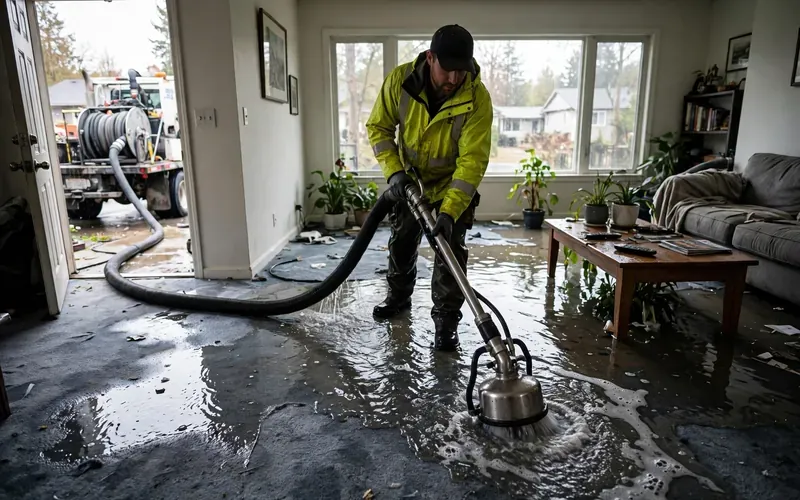
When water is standing on your floor, every hour it sits there pushes it deeper into the drywall, the cabinets and the slab. Aqua Revive’s emergency water extraction in Boca Raton gets the bulk water out first, with truck-mounted and portable extractors and pumps. Then we measure exactly how far it spread, so drying starts on the right footing and your insurer gets a clear record from the first visit.
Call (561) 979-0130 · Open Monday – Saturday 8:00 AM – 6:00 PM
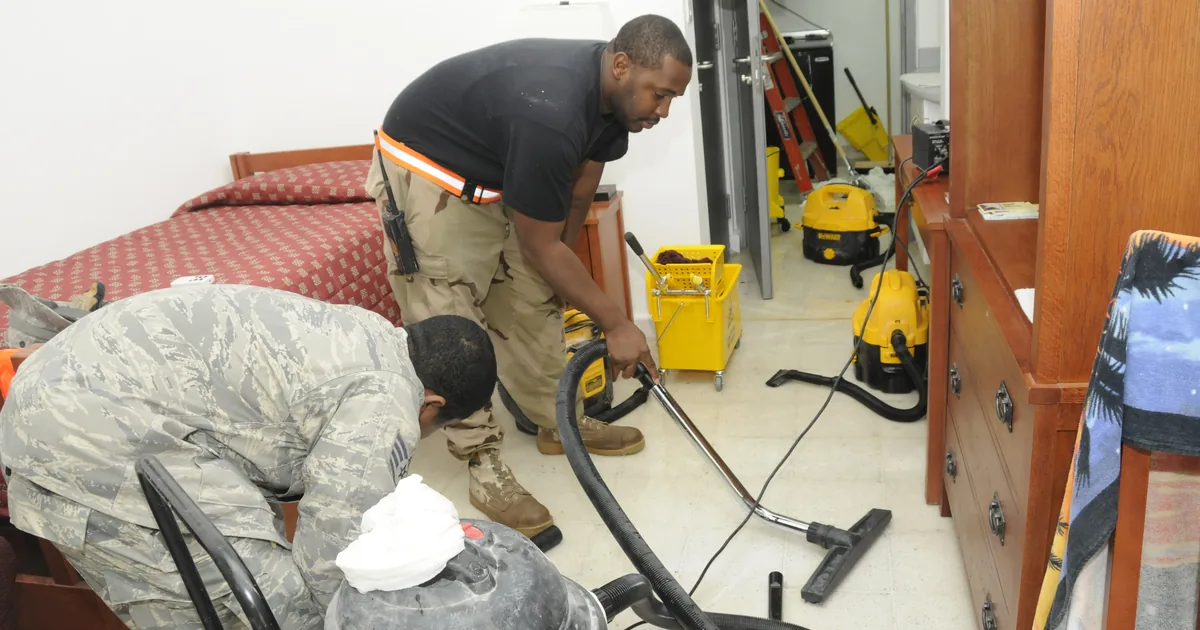
A mop and a shop vac can handle a spill on tile. You need professional extraction when:
Shut off the water at the main or the unit valve, switch off breakers to wet rooms if you can reach the panel safely, and photograph everything before you move it. Lift furniture legs onto foil or wood blocks, and get rugs, papers and electronics off the floor. Don’t run a household vacuum on wet carpet or turn ceiling fans on in a room with a wet ceiling. And keep the part that failed, whether it’s the hose, the valve or the supply line.
How fast water does damage depends on where it’s sitting. Boca buildings give it a few easy paths.
For a team that does it every day, the first visit follows a set order. It’s the order the IICRC S500 water restoration standard is built around.
Often, if it was clean water and we get there quickly. Carpet itself can usually be extracted and dried in place. The pad underneath soaks up far more water and is usually replaced. Carpet soaked with Category 3 water, from sewage or outside floodwater, has to be removed.
Yes. It runs through grout lines and along the edges, and it can sit between the tile and the slab or soak into the bottom of the walls. A moisture meter tells us whether it’s surface water or trapped water, and whether any tiles need lifting.
Extraction is usually done on the first visit. How many hours depends on the area, the depth of water and the access, and a single-unit condo is quicker than a whole house. Drying takes several more days and is handled under its own plan.
Extraction is priced on what we actually measure: the square footage of wet flooring, the water category, how deep it is, and any pad or materials removed. Drying equipment is then billed per piece, per day, while it runs. You get an itemized estimate based on those measurements, in the line-item format insurers use. Nothing beyond the emergency work starts until you’ve approved it.
Most Florida homeowners and HO-6 condo policies expect you to take reasonable steps to prevent further damage after a covered loss. Emergency extraction and drying are exactly that. A few things to know:
General information, not insurance or legal advice.
Extraction is the first step. Here is what usually comes next.
Where every extraction job goes next
When the source is hidden in a wall, ceiling or slab
When a slow leak has already grown mold
When the water is Category 3
When the water came in from outside
Putting back what could not be saved
For offices, stores and condo buildings
We cover East Boca & Downtown (33432, 33431), Northeast Boca and the Intracoastal (33487), Central Boca (33486, 33433) and West Boca (33434, 33428, 33496, 33498). We also cover Highland Beach, Delray Beach, Deerfield Beach, Boynton Beach, Coconut Creek, Parkland and Lighthouse Point.
33432, 33431, 33487. Condos, towers and waterfront homes.
33487, 33444–33446, 33483–33484, 33426, 33435–33437. King tide, storm and seasonal-home leaks.
33486, 33433, 33441–33442, 33064. Cast-iron drains and street flooding.
33434, 33428, 33496, 33498, 33063, 33066, 33073, 33067, 33076. Supply-line and AC leaks in gated communities.
Phones are answered Monday – Saturday, 8:00 AM – 6:00 PM. While you wait, shut off the water, cut power to wet rooms if you can do it safely, and photograph the damage before you move anything.
No. Many Boca owners aren’t in town when a leak starts. We can work through your building manager, gatehouse, home-watch company or a lockbox you authorize, and send you photos and a video walk-through of what we found and did.
Usually, yes, if it’s clean water and the electrics in the wet area are safe. You’ll hear drying equipment running day and night for several days. With Category 3 water, or if the kitchen or only bathroom is out of action, staying elsewhere is often more practical.
For clean surface water on tile, yes, and it helps. Don’t use it on sewage or outside floodwater, and don’t try to dry wet carpet pad or walls yourself. A shop vac can’t pull water out of pad, drywall or the slab, and that hidden water is where mold starts.
We lift furniture onto blocks to stop wicking and staining, move rugs and contents out of the wet area, and photograph and list anything damaged. Items that need specialist cleaning or drying are inventoried before they leave the room.
Tell your building manager right away so the source unit and any shared lines can be checked. We can extract in your unit and, with permission, the affected units around it. Who pays depends on Florida’s condo law and your building’s declaration; our homepage explains the basics.
It depends on the source. A burst supply line is clean water. Washer or dishwasher discharge is gray water. Sewage, toilet overflow with waste, and outside floodwater are Category 3 and carry bacteria, so avoid contact and keep children and pets away.
Shut off the water, take your photos, and call (561) 979-0130. We’ll get the water out, show you exactly how far it spread, and have drying running before we leave.