
Drywall holds water in its paper face and gypsum core. Dried quickly, it usually stays. Left wet, it loses strength and grows mold on the back side first, where you can’t see it.
Home · Structural Drying
Structural Drying in Boca Raton, FL
Getting the standing water out is step one. The water you can’t see, inside drywall, framing, cabinet bases, hardwood and the slab, is what decides whether a leak becomes a mold problem. Aqua Revive’s structural drying in Boca Raton takes those materials back to a measured dry standard. We use commercial dehumidifiers and air movers, and log moisture readings every day until the numbers prove the job is done.
Call (561) 979-0130 · Licensed and IICRC-certified · Open Monday – Saturday 8:00 AM – 6:00 PM
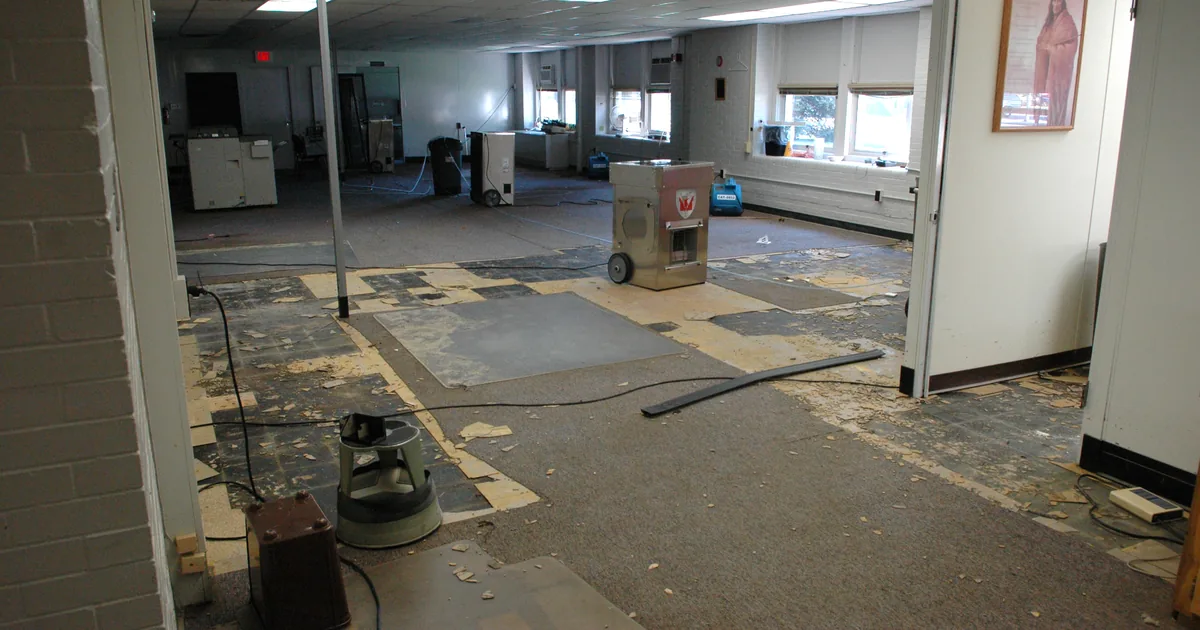
Why Drying Decides How Much You Lose
Dry fast and correctly, and most building materials can stay: drywall, baseboards, cabinets, often even hardwood. Dry slowly or partly, and the same materials swell, warp, delaminate or grow mold, and the job turns into demolition and rebuild. The difference usually comes down to a few days of drying done well.
Particleboard and MDF cabinets swell permanently once saturated. Fast drying is the best chance to save solid-wood boxes and fronts.
Hardwood cups as the bottom absorbs water faster than the top. Caught early, many floors flatten back out with targeted drying.
Concrete slabs soak up water and give it back slowly. A floor can feel dry while the slab underneath is still wet enough to ruin new flooring laid on top.
Drying a Building in Boca Raton’s Climate
South Florida air already carries a lot of moisture, which changes how drying has to be done here.
Open windows make it worse
Outside air is humid most of the year, so letting it in adds moisture instead of removing it. We close the affected area into a drying chamber and let the dehumidifiers do the work.
Your AC is part of the plan
Running the home’s air conditioning helps remove moisture and keeps temperatures steady. We’ll tell you what to set it to and whether any vents should be closed. If the air handler itself got wet or caused the leak, we’ll say so before it’s switched back on.
Older condos and villas often have limited circuits
Dehumidifiers and air movers draw real power, so we plan which outlets each unit runs on to avoid tripping breakers, especially in buildings from the 1970s and ’80s.
High-end finishes need specialty drying
Natural stone, site-finished hardwood and custom millwork are common in East Boca and the country-club communities, and they can’t simply be torn out and replaced cheaply. Specialty drying methods are designed to save them.
How Our Structural Drying Process Works
We follow the IICRC S500 standard for water damage restoration. It treats drying as a measured process, not “run fans until it looks dry.”
-
Set drying goals
We take readings from unaffected materials of the same type elsewhere in your home, such as dry drywall in the hallway or dry hardwood in the bedroom. Those readings become the target for the wet areas.
-
Classify the job
The S500 grades drying jobs by how much water has to be evaporated. Class 1 is a small area of low-absorbency materials. Class 4 means dense materials like hardwood, plaster or concrete that hold water deep down and need specialty methods.
-
Place the equipment
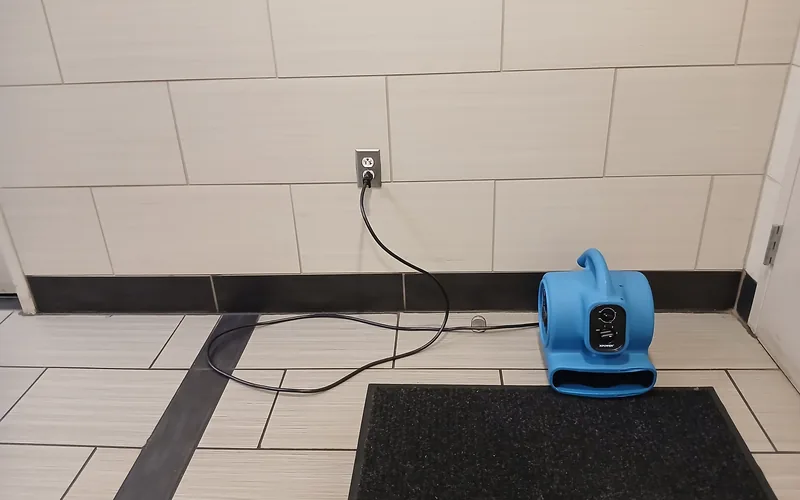
Low-grain refrigerant (LGR) dehumidifiers pull water out of the air even when it’s already quite dry. Desiccant dehumidifiers work for dense materials and enclosed spaces. Air movers sweep moist air off wet surfaces so it can evaporate. The number and placement follow from the wet area and its class.
-
Open up only what’s needed
Instead of tearing out whole walls, we can often dry wall cavities through small holes behind the baseboard, or by removing just the toe kicks under cabinets. Hardwood can sometimes be dried in place with drying mats that pull moisture from the boards.
-
Monitor every day
Each visit we record temperature, humidity and moisture readings at fixed points, adjust or move equipment, and update your drying log.
-
Confirm dry, then remove equipment
Equipment comes out when every monitored material reaches its drying goal, not on a set day. The final readings close your file and go to your insurer.
Why can’t I just use fans and open the windows?
Fans move air but don’t remove moisture. In a closed Florida house they just shift the humidity around, and open windows bring more of it in. Without a dehumidifier pulling that water out, materials can stay wet underneath while the surface feels dry, and that’s the moisture that feeds mold.
How do you know the house is really dry?
By the numbers, not by touch. Pin and pinless moisture meters, a thermo-hygrometer for the air, and a thermal camera to spot cold, wet patches. A material is dry when its reading matches the dry reference we took from the same material in an unaffected room.
Can I turn the equipment off at night?
Please don’t. Drying works by steadily pulling moisture out of the materials, and switching off for eight hours lets the air re-humidify and costs you time. If the noise is a problem in a bedroom, call us and we’ll adjust placement rather than shut it down.
What Structural Drying Costs
Drying is billed on what was actually used: each dehumidifier and air mover per day it ran, daily monitoring visits, and any specialty drying such as wall-cavity systems or hardwood mats. A job that’s caught early and dries in a few days costs far less than one that needs a week of equipment and partial demolition. Your itemized invoice lines up with the daily drying log, so you and your adjuster can see exactly what ran, where and for how long.
Insurance and Your Drying Records
The drying log is often the most important document in a water claim. It shows the loss was handled promptly and properly, which is what Florida policies expect after a covered leak.
Readings back up the scope. Daily moisture readings show why materials were kept, dried or removed.
Prompt drying protects your coverage. Many Florida policies limit or exclude mold that results from a failure to act quickly, and some cap mold coverage at a low amount. Fast, documented drying is the best protection.
Ask about electricity. Drying equipment runs around the clock. Ask your adjuster whether your policy reimburses the extra electricity; keep your before-and-after bills.
General information, not insurance or legal advice.
Related Services
- Emergency Water Extraction — Standing water pumped out fast, day or night
- Leak Detection — Tracing hidden leaks behind walls, under tile and in slabs
- Mold Remediation — Licensed containment, removal and cleaning to IICRC S520
- Sewage Backup Cleanup — Safe removal and disinfection of Category 3 water
- Flood & Storm Damage — Cleanup and drying after storm, street flood or king-tide water
- Water Damage Repair & Reconstruction — Rebuilding what couldn’t be saved, matched to what was there
- Commercial Water Damage — Water damage restoration for Boca Raton businesses
Where We Provide Structural Drying & Dehumidification in Boca Raton
We provide structural drying & dehumidification across East Boca & Downtown (33432, 33431), Northeast Boca (33487), Central Boca (33486, 33433) and West Boca (33434, 33428, 33496, 33498). We also cover Highland Beach, Delray Beach, Deerfield Beach, Boynton Beach, Coconut Creek, Parkland and Lighthouse Point.
East Boca & Highland Beach · Northeast Boca + Delray & Boynton · Central Boca + Deerfield & Lighthouse Point · West Boca + Coconut Creek & Parkland
Structural Drying FAQs
How long does structural drying take?
A contained clean-water loss caught early often dries in about three to five days. Dense materials such as hardwood, plaster and concrete, or water that sat for days, can take longer. Equipment stays until readings reach the drying goal, not for a fixed number of days.
Will my electric bill go up during drying?
Yes. Dehumidifiers and air movers run around the clock, so expect a higher bill for that period. Keep the bill and the one before it, and ask your adjuster whether your policy reimburses the difference.
Can my hardwood floors be saved?
Often, if drying starts quickly and the boards haven’t cracked or come loose. Specialty drying mats pull water up through the boards while dehumidifiers dry the room. Cupping frequently settles as the wood dries. We wait for stable readings before deciding on sanding or replacement.
Do my walls have to be cut open?
Not always. With clean water, many walls can be dried through small holes behind the baseboard or by removing only the baseboard. Walls are cut when insulation is soaked, when the water was Category 2 or 3, or when readings don’t come down.
Should I keep my air conditioning on?
In most cases, yes, set to the temperature we recommend for your job. The AC helps remove moisture and keeps the drying area stable. The exception is when the air handler caused the leak or got wet itself; we’ll check it first.
What if mold is already growing?
If we find visible growth or a musty odor in a wall cavity, the affected area is contained and handled as mold remediation by a Florida-licensed remediator. Drying alone doesn’t remove mold that has already grown.
Water Is Out, But Is It Dry? Call Aqua Revive
If your floors or walls were wet and nobody has taken moisture readings, call (561) 979-0130. We’ll measure what’s still wet and set a drying plan you can follow, reading by reading.