
Your water bill jumps without any change in how you use water.
Home · Leak Detection
Leak Detection in Boca Raton, FL
Some leaks announce themselves. Others run quietly inside a wall, under a tile floor or beneath the slab for weeks before a stain, a smell or a water bill gives them away. Aqua Revive’s leak detection in Boca Raton finds where the water is coming from and how far it has spread, using thermal imaging, moisture meters and listening equipment. That way the opening in your wall or floor is small, and the repair goes in the right place the first time.
Call (561) 979-0130 · Licensed and IICRC-certified · Open Monday – Saturday 8:00 AM – 6:00 PM
Signs You Have a Hidden Leak
Call for leak detection if you notice any of these, especially more than one at once:
You hear water running when every tap, toilet and appliance is off.
A patch of tile floor feels warm underfoot, a classic sign of a hot-water line leaking under the slab.
Grout stays dark, tiles sound hollow or start to lift, or baseboards swell.
A musty smell in one room or closet that cleaning doesn’t fix.
Paint bubbling, a stain spreading on the ceiling, or drywall that feels soft near the floor.
Water in the AC closet or around the air handler.
Water through your ceiling when the unit above says it has no leak.
How can I check for a leak myself?
The water meter test takes ten minutes. Turn off every tap and every appliance that uses water, and make sure nobody flushes. Then look at your water meter. If the dial or the small leak indicator is still moving, water is going somewhere it shouldn’t. It won’t tell you where, but it confirms there’s a leak worth tracing.
Where Leaks Hide in Boca Raton Homes and Condos
The median Boca home was built around 1983, and the way homes here were built shapes where leaks start.
Supply lines in and under the slab
Many homes run water lines through or beneath the concrete slab. When one fails, water spreads under the tile and up into the walls long before it shows on the surface.
Cast-iron drains in older homes
Homes from the 1950s to the late 1970s, common in Central and East Boca, often still have cast-iron drain lines under the slab. They corrode from the inside, crack and seep for months, and insurers frequently argue the damage is long-term wear.
AC condensate lines and drain pans
Air handlers in hall closets and attics produce water all day in our climate. A clogged drain line, a rusted pan or a failed float switch sends it into the closet floor, the wall or the ceiling below.
Showers and tub surrounds
Older tiled showers can leak through cracked grout or a failed shower pan, wetting the wall cavity and the room next door.
Water heaters, washers and ice makers
Supply hoses and valves wear out, and Boca’s hard water doesn’t help.
Condo risers and branch lines
In towers, water from a shared riser or a neighbor’s branch line can appear several units away from its source. Tracing it takes access to more than one unit, through building management.
Windows, sliders and stucco
Wind-driven rain gets in around frames and through cracked stucco and shows up as interior leaks during summer storms.
How We Find a Leak Without Tearing Your House Apart
We work from the least invasive methods to the most, and only open what the evidence points to.
-
Interview and history
When did it start? Is the bill higher? Does it get worse after showers, when the AC runs, or when it rains? Those answers narrow the search fast.
-
Thermal imaging
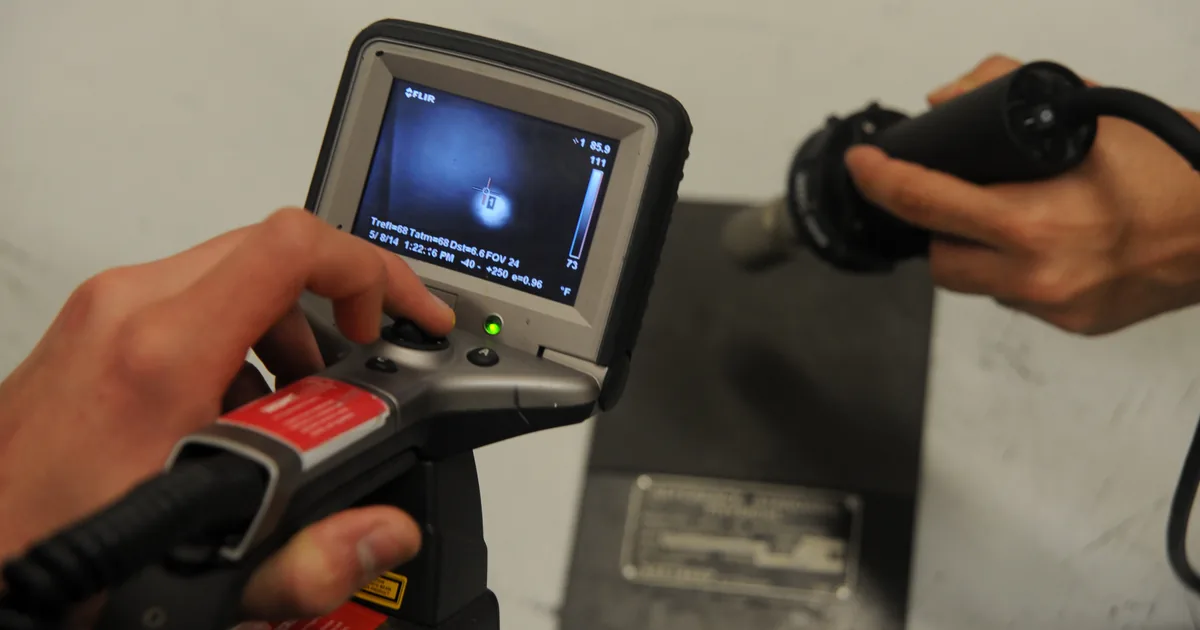
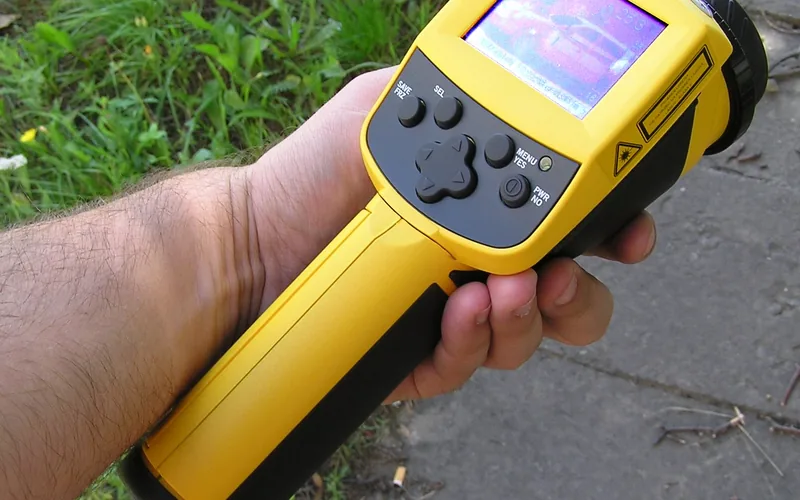
An infrared camera shows temperature differences behind surfaces: a cool, damp patch on a wall, or a warm stripe on the floor where a hot-water line leaks under the slab.
-
Moisture meters
Pinless meters scan through drywall, tile and wood without damage; pin meters confirm how wet a material is. Together they map the wet area and confirm what the thermal camera suggests.
-
Air readings inside walls
Through a small hole, a thermo-hygrometer reads the humidity inside a wall cavity, showing whether water is trapped behind a surface that looks dry.
-
Acoustic listening
Ground microphones pick up the sound of pressurized water escaping from a line under the slab or behind a wall.
-
Isolation and pressure tests
Shutting off hot, cold and individual fixtures one at a time tells us which line is losing water. Pressure testing and camera inspection of drain lines are done by a Florida-licensed plumbing contractor.
-
Mark, map and report
You get the leak location marked, a moisture map of everything affected, and photos for your plumber and your insurer.
Is thermal imaging enough on its own?
No. A thermal camera shows temperature, not water. A cold spot can be a leak, or just a draft or an AC vent. Every thermal finding is checked with a moisture meter before anyone opens a wall.
Will you have to break my tile or slab?
Only if the repair needs it, and only at the spot we’ve pinpointed. Sometimes a licensed plumber can reroute a leaking line through the walls or ceiling instead of opening the slab. Your plumber decides the repair method; our job is to make sure they’re opening the right square foot.
Do you fix the pipe too?
Pipe repairs in Florida must be done by a licensed plumbing contractor. Once the repair is made, we handle the water damage it caused: extraction, drying and repair.
What Leak Detection Costs
The cost depends on how hidden the leak is and which methods it takes. A wet AC closet traced with a meter and a thermal scan is a short visit. A slab leak that needs acoustic listening and line isolation takes longer. You get the price before we start, and a written report afterward.
Insurance and Hidden Leaks
Hidden leaks are where Florida claims get argued over most, because insurers look closely at how long the water was leaking.
Sudden vs long-term. Most homeowners policies cover sudden, accidental water damage. Many exclude leaks that ran repeatedly over weeks or months. Our report records what we found and when, which helps establish the timeline.
The pipe vs the damage. Policies often treat the broken pipe differently from the damage it caused, and some cover the cost of opening a wall or floor to reach it. Check your policy wording or ask your agent.
Report it right away. Florida gives you up to one year from the date of loss to report a new claim, but the sooner you report a hidden leak once it’s found, the easier it is to show it wasn’t neglected.
General information, not insurance or legal advice.
Related Services
- Emergency Water Extraction — Standing water pumped out fast, day or night
- Structural Drying & Dehumidification — Drying to a measured dry standard, with daily moisture readings
- Mold Remediation — Licensed containment, removal and cleaning to IICRC S520
- Sewage Backup Cleanup — Safe removal and disinfection of Category 3 water
- Flood & Storm Damage — Cleanup and drying after storm, street flood or king-tide water
- Water Damage Repair & Reconstruction — Rebuilding what couldn’t be saved, matched to what was there
- Commercial Water Damage — Water damage restoration for Boca Raton businesses
Where We Provide Leak Detection in Boca Raton
We provide leak detection across East Boca & Downtown (33432, 33431), Northeast Boca (33487), Central Boca (33486, 33433) and West Boca (33434, 33428, 33496, 33498). We also cover Highland Beach, Delray Beach, Deerfield Beach, Boynton Beach, Coconut Creek, Parkland and Lighthouse Point.
East Boca & Highland Beach · Northeast Boca + Delray & Boynton · Central Boca + Deerfield & Lighthouse Point · West Boca + Coconut Creek & Parkland
Leak Detection FAQs
How do I know if I have a slab leak?
Common signs are a warm spot on a tile floor, the sound of running water with everything turned off, a water meter that keeps moving, damp or lifting flooring, and a bill that’s higher than usual. One sign alone can have other causes; two or more together are worth a professional check.
Can you find a leak without opening my walls?
In most cases, yes, at least to the point of pinpointing it. Thermal imaging, moisture meters and acoustic equipment work from the surface. When an opening is needed, it’s usually a small one at the exact spot, not a whole wall.
Does homeowners insurance pay for leak detection?
It depends on your policy. Many cover the water damage a sudden leak causes, and some cover the cost of opening walls or floors to reach the pipe. Detection itself is sometimes covered as part of the claim. Check your policy wording or ask your agent before assuming either way.
My AC closet floor is wet. Is that a leak?
Usually it’s the condensate system: a clogged drain line, an overflowing pan or a failed float switch. Turn the AC off at the thermostat, mop up, and call us or your AC technician. If the water has reached the wall or the ceiling below, we’ll check how far it spread.
Water is coming through my ceiling, but the unit above says it has no leak. What now?
Tell your building manager in writing right away. The source can be a shared riser, a neighbor’s AC line or shower pan, or water getting in from outside. Tracing it often needs access to the unit above and the building’s records, which the manager can arrange.
Why did my water bill suddenly go up?
It can be a running toilet, a dripping irrigation valve or a hidden supply leak. Do the meter test above: if the meter moves with everything off, something is leaking. Check toilets and irrigation first, then call for leak detection if the meter still moves.
Think Water Is Hiding Somewhere? Call Aqua Revive
If the meter’s moving, the floor feels warm or a stain keeps growing, call (561) 979-0130. We’ll find where the water is coming from and how far it’s gone, before anyone opens a wall.